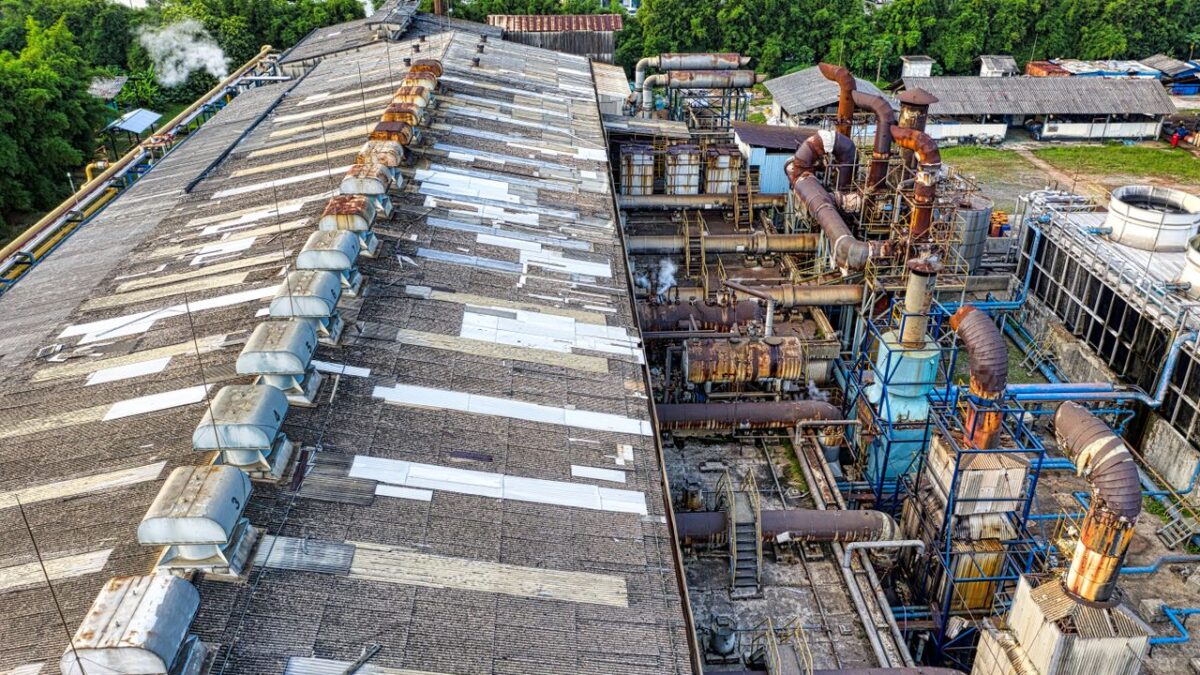
An operator preparing a hall renovation in the summer of 2026 ran into three new instruments within two weeks. The new asbestos exposure limit took effect on 15 July 2026, the two other instruments on 1 July 2026, and each aims at a different part of the budget: at occupational safety, at wage and social calculations, and at the price of electricity (primary source — Slov-lex, Government Regulation 185/2026 Coll., promulgated 10. 7. 2026).
This text arranges the three changes by effective date and gives for each the figure that can be checked in the text of the instrument. It states no rates or calculations that follow from them in a particular case, and it does not examine the annexes, which the open version does not render. The order is by effective date rather than by importance, because it is the date that decides which duty is already running and which is yet to start. All three instruments are read in their promulgated versions, so any later amendments are not reflected in them.
1 July 2026: the subsistence minimum amounts
Measure 155/2026 Coll. of the Ministry of Labour, Social Affairs and Family of the Slovak Republic adjusted the subsistence minimum amounts. It was approved on 17 June 2026, promulgated on 25 June 2026 and effective from 1 July 2026, and its Section 1 states three amounts at once (primary source — Slov-lex, Measure 155/2026 Coll.).
| Provision of the act | Amount from 1 July 2026 |
|---|---|
| Section 2(a) of the act on the subsistence minimum | 295,22 euros |
| Section 2(b) of the act on the subsistence minimum | 205,96 euros |
| Section 2(c) of the act on the subsistence minimum | 134,80 euros |
1 July 2026: thresholds for the individual tariff
Government Regulation 169/2026 Coll. sets the criteria for applying the individual tariff for system services and the individual tariff for system operation. It was approved on 24 June 2026 and promulgated and effective on 1 July 2026, and the criteria are drafted as thresholds rather than as administrative discretion (primary source — Slov-lex, Government Regulation 169/2026 Coll.).
The criteria are two and operate side by side, so a customer has to watch both. The first threshold is consumption: average annual electricity consumption over the last three years, or planned consumption for the following year, must be at least 1 GWh. The second is the cost share: the share of annual electricity costs must exceed 10 % of the production costs of all products manufactured. In a further alternative the regulation works with a share of at least 80 % of the customer’s final electricity consumption (primary source — Slov-lex, Government Regulation 169/2026 Coll., as of 22. 8. 2026).
15 July 2026: the asbestos exposure limit
Government Regulation 185/2026 Coll. on the protection of employees from risks related to exposure to asbestos at work was approved on 1 July 2026, promulgated on 10 July 2026 and, under its Section 16, took effect on 15 July 2026. Its Section 3(4) sets the highest permissible exposure limit in relation to an eight-hour time-weighted average by means of two values.
The first is 0,002 fibres per cm³ for fibres longer than five micrometres, narrower than three micrometres and with a length-to-width ratio greater than 3:1. The second is 0,01 fibres per cm³ for fibres narrower than 0,2 micrometres. These are therefore two limits for two fibre geometries, not one figure, and the measurement has to distinguish which of them a captured fibre belongs to (primary source — Slov-lex, Government Regulation 185/2026 Coll., Section 3(4), as of 22. 8. 2026).
The regulation also allows an exception and fixes its limits. Where exposure is irregular, of low intensity and the risk assessment shows the limit will not be exceeded, the duties under Section 3 are not required for short-term irregular maintenance work with non-friable materials and for the removal of undamaged materials in which fibres are firmly bound. In an emergency or a natural disaster the direction reverses: an employer holding an authorisation must, no later than 48 hours from the start of urgent removal, submit written notification to the competent public health authority.
What to check before the next renovation
The following points can be settled from documents the operator already holds and are ordered from the cheapest to the most laborious. None of them depends on an instrument not yet promulgated, and none requires an external opinion until it turns out that the limit may be exceeded.
- Check whether the risk assessment for works with possible asbestos takes both values of the limit into account, not just one.
- Check that the measurement is carried out by a professionally competent person and that samples are analysed by a laboratory equipped for counting fibres.
- Verify that the internal emergency procedure contains the 48-hour deadline for written notification to the public health authority.
- Update wage and social calculations tied to the subsistence minimum amounts applicable from 1 July 2026.
- Compare the site’s annual electricity consumption against the 1 GWh threshold and the electricity cost share against the 10 % limit of production costs.
- Add to the maintenance plan the distinction between short-term irregular work with non-friable materials and other interventions, because that distinction decides whether the duties under Section 3 apply.
- Check that contracts with demolition and maintenance contractors refer to Government Regulation 185/2026 Coll. and not to the instrument that applied before 15 July 2026.
Zdroje a dáta
Primary sources: Slov-lex — Government Regulation 185/2026 Coll., Measure 155/2026 Coll. of the Ministry of Labour, Social Affairs and Family, and Government Regulation 169/2026 Coll., all read in their promulgated versions on 22 August 2026. The dates of approval, promulgation and entry into force are taken from the instrument records in the same database.
Annex 1 to the asbestos regulation, which sets the minimum requirements for the content of professional training, appears in the open version as a separate file, so its content is not reproduced here. Act 165/2026 Coll., which amends the act on the protection, support and development of public health, was verified in the same database by title and date of promulgation, but its date of entry into force is not stated in the record of the promulgated version, and it is therefore not mentioned here among the dates (primary source — Slov-lex, Act 165/2026 Coll., promulgated 1. 7. 2026).
This material is a general analysis of published rules. It is not legal, tax, immigration or financial advice.